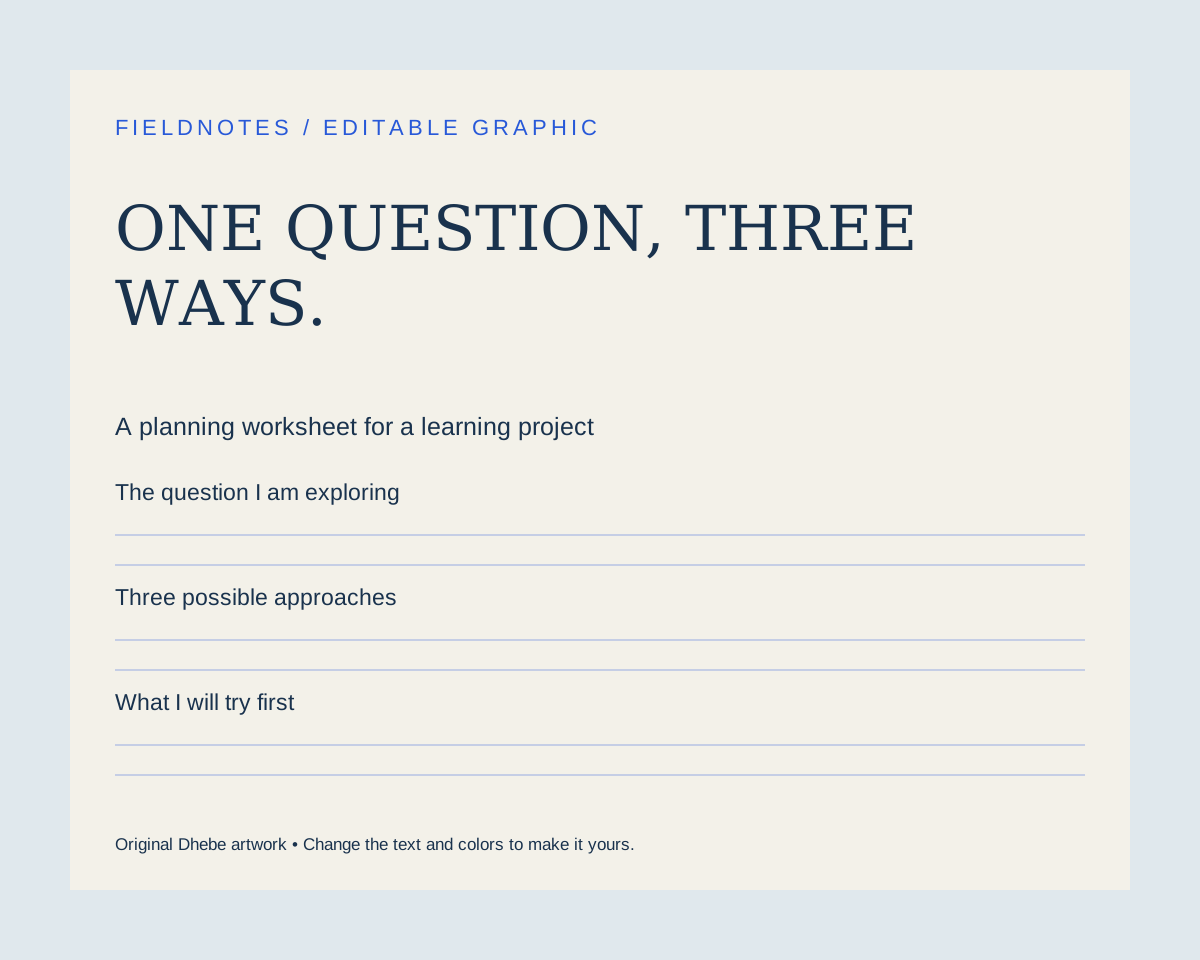
Plan a small experiment.
Give a question a clear shape, three possible approaches and one first step.
WHAT HAPPENS IN A WORKSHOP
Each example has a purpose, an outline and a useful next step. Replace the sample curriculum and instructors with your own verified information.
SAMPLE CURRICULUM
Turn a messy idea into a useful visual explanation.
Collect the important parts of a question. Look for relationships before choosing a shape.
Create a map, a sequence and a comparison. Notice how the form changes the meaning.
Ask a partner to explain what they see. Use the gaps to make the next version clearer.
No drawing skills required. Paper, a pen and a question are enough.
Build an enquiry brief
SAMPLE CURRICULUM
Build a sequence another person can follow.
Identify who needs to understand it and what they already know.
Create an opening, an explanation and an example with a clear relationship.
Use questions and a small task to see what the audience takes away.
Bring an idea you know well and a short example of how you explain it today.
Build an enquiry brief
SAMPLE CURRICULUM
A repeatable process for noticing, collecting and making.
Notice patterns in the things you save and the questions you return to.
Limit the materials and the time. Follow a question rather than a finished outcome.
Record what surprised you and choose one adjustment for the next session.
Beginner friendly. Use familiar tools and materials; no specialist software is needed.
Build an enquiry briefTAKE A LITTLE THINKING SPACE
Download printable PDFs or editable SVGs. These sample tools are included with the template.
Give a question a clear shape, three possible approaches and one first step.
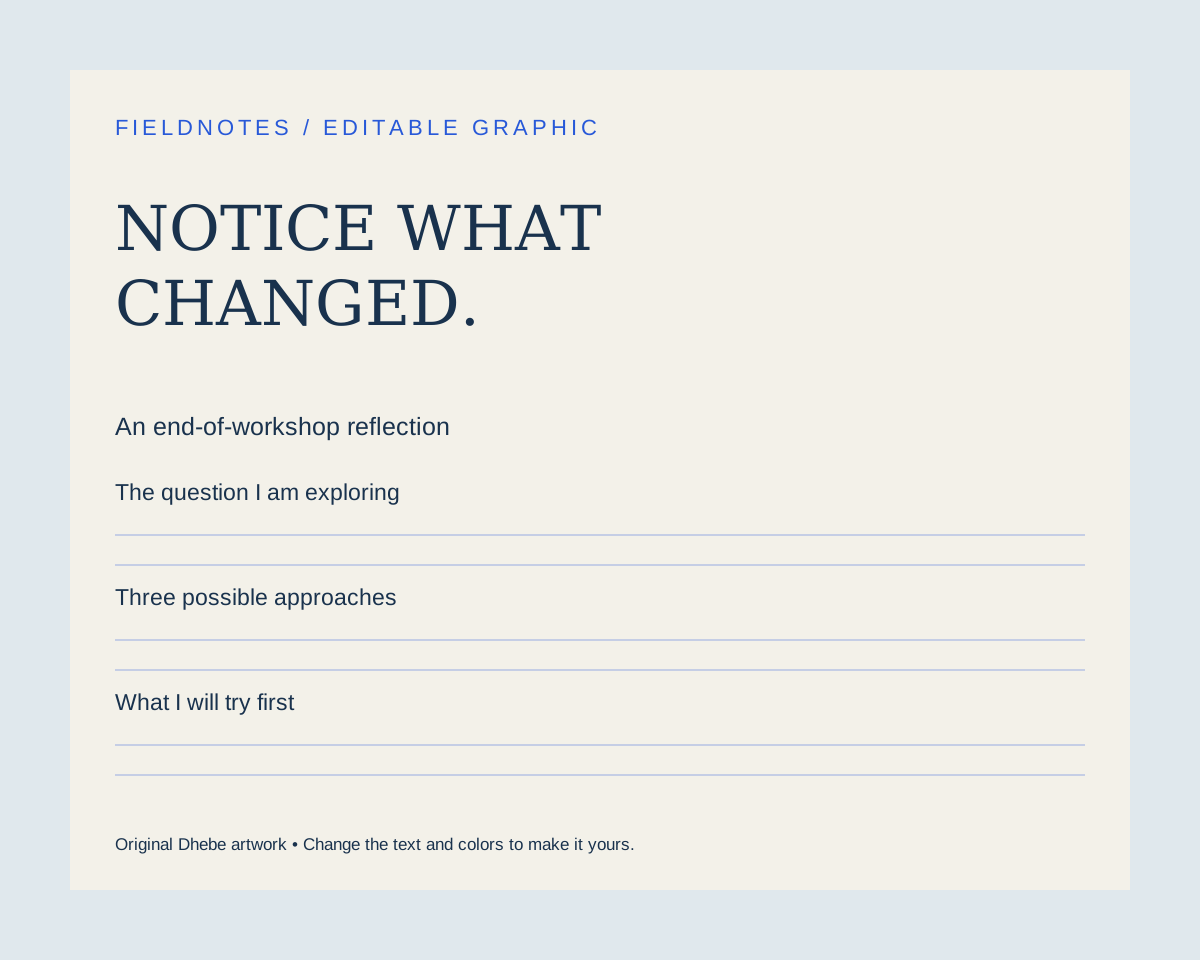
Reflect on what you tried, what you noticed and what you would like to do next.